
Manuel’s scholarship over the last twenty-five years has contributed to the literature on the various transformations brought about by democratization in the two Iberian nation-states, with a focus on religion and politics. He has authored, co-authored or edited twelve books and numerous peer-reviewed articles.
The Transition to Democracy in Portugal
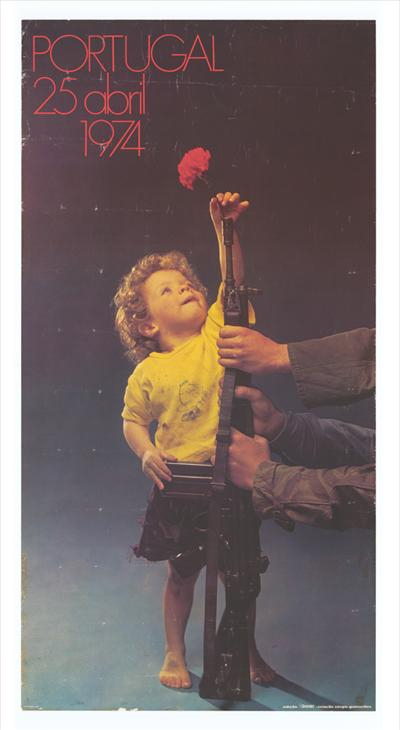
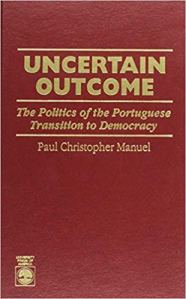
Manuel has published four books on the transition to democracy in Portugal. His first book on the subject was called Uncertain Outcome: The Politics of the Portuguese Transition to Democracy released in 1994. This book emphasizes that the Portuguese transition to democracy involved a complex dynamic of interests, strategies, fears, wants, and goals among the multitude of players. After the revolution of 25 April 1974, the future of Portugal was in the hands of those military officers responsible for the overthrow of the previous regime. What would they do? A peaceful transition or a civil war? A capitalist or a communist system? Revenge against the old, or the establishment of a just, legal order? The revolutionary leaders spoke in terms of following a “3 Ds” political program of decolonization, democratization, and development, but there was no unifying conceptual vision of what those three Ds would exactly look like, or indeed any practical plan to achieve them. The analytical focus on political factors in this book helps to reveal these crucial factors in a process that resulted in the successful emergence of democracy.
In 1995, he published The Challenges of Democratic Consolidation in Portugal: Political, Military and Economic Issues. This study examines how, by solving problems and fulfilling expectations, Portugal’s relatively new democratic regime improved its chances for long-term durability. The book divides Portugal’s consolidation period into three recognizable intervals, during which the new regime had to simultaneously confront political, economic, and military challenges. Scholars in comparative politics and government will find this a useful study of democratic development.
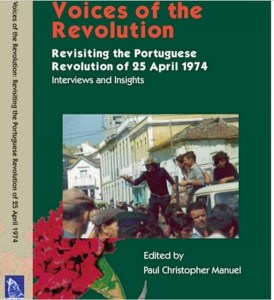
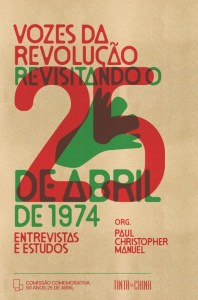
In 2019, Manuel published Voices of the Revolution: Revisiting the Portuguese Revolution of 25 April 1974 — Interviews and Insights with the Portuguese Studies Review. This volume revisits the events of April 25 with original interviews and new insights from a number of leading scholars, including contributions by Nancy Bermeo, Maria Inácia Rezola, Stewart Lloyd-Jones, Luís Nuno Rodrigues, David Silva Ferreira, and Douglas Wheeler. The volume features interviews with 14 military leaders of the Portuguese Revolution conducted by Manuel. These interviews took place in 1990 and 1991, some 15 years after the founding of the democratic regime in 1976, and just after the 1989 fall of the Berlin Wall. As such, these interviews bear close examination, as they provide perspectives not only on what happened in Portugal after April 25 but also offer an assessment of the role of Portugal in the third wave of global democratization.
In 2024, that volume was translated into Portuguese, as Vozes da Revolução, by the Tinta da China publishing house (Lisbon). This book is part of the “25 of April Seen from Abroad” series, by the Comissão Comemorativa 50 anos 25 de Abril (50th anniversary Commemorative Committee of the April 25 revolution). These interviews were originally part of his dissertation research on the transition to democracy in Portugal; they have since been deemed to be historically significant.
Vozes da Revolução is now available online and at bookstores throughout Portugal. It was a “Livro do dia” [book of the day] on June 2, 2024, at the Feira do Livro de Lisboa. [Lisbon book fair]


Democratization, Civil Society, and the European Union in Portugal and Spain
While Portuguese civil society played a secondary role during the military-dominated transition period (1974-1976), voluntary associations and organizations formed and stabilized after 1976, once democratic institutions were established.
In 1999, with Kerstin Hamann of the University of Central Florida, Manuel published an article entitled “Civil Society in 20th Century Portugal” in South European Politics and Society. They argue that even though political institutions were not favorable for the development of a strong civil society for most of Portugal’s history, organized civil society appears to be emerging under the new democratic regime.
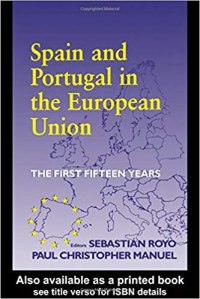
Membership in the European Union may have helped to deepen civil society in Portugal and Spain. In their 2003 edited volume called Spain and Portugal in the European Union, Manuel and Suffolk University profesor Sebastian Royo explored the political, social and economic transformations in Spanish and Portuguese civil society after they joined the European Union. This volume features contributions by leading scholars of Portugal and Spain. It was published by Frank Cass Publishers, and also appeared as a special edition of the peer-reviewed journal South European Politics and Society. It was also translated into Portuguese, and released in Portugal in 2004. This publication was based on an international conference Royo and Manuel organized at the Minda de Gunzburg Center for European Politics at Harvard University in November of 2001.
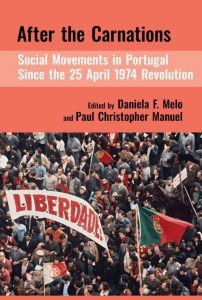
In 2025, with Daniela Melo of Boston University, Manuel published After the Carnations: Social Movements in Portugal Since the 25 April 1974 Revolution with Liverpool University Press. Although much of the existing democratization scholarship has logically focused on the emerging political elites and institutions of the period, there is much more to consider about the revolution’s ramifications to the Portuguese social-movement sector. This volume asks two main questions. First, what are the key characteristics of the differing social movements in Portugal since April 25. Second, how have these various social movements been able to contribute to the articulation of a robust civil society in Portugal post-April 25. The chapters in this volume seek to explore the practical consequences of these social movements to Portuguese civil society.


Religion and Politics
In the years since the 25 April 1974 revolution, Portuguese civil society has started to become more articulated, differentiated, and secularized; the role of the church in civil society has diminished. The numbers of new vocations for religious life is down, as are the overall numbers of self-identified Roman Catholics, and there are fewer who practice the faith. In addition, the Church has recently suffered a string of high-profile public-policy defeats, including the legalization of same-sex marriage and the decriminalization of abortion. The Catholic Church is, of course, a very complex and complicated institution, but in the face of all these difficult challenges, many have come to wonder what hold the Church still retains on Portuguese associational life.
Manuel has written on a number of topics dealing with those issues, including the on-going political significance of the 1917 Marian apparitions at Fatima; the relationship between the new democratic state and the Catholic Church; and the role of faith-based associations and social welfare in Portugal. Manuel’s current research is on how faith-based organizations are contributing to the well-being of democratic life in Portugal.
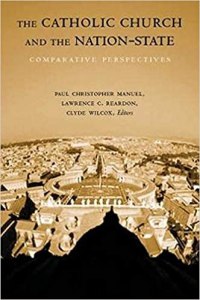
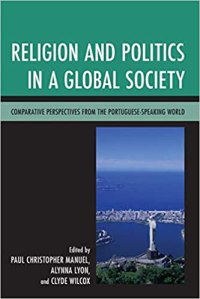
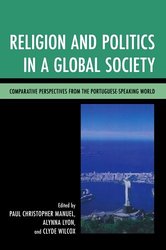
Manuel is also interested in questions dealing with the Catholic Church and global politics. In 2006, with Clyde Wilcox of Georgetown University and Lawrence Reardon of the University of New Hampshire, Manuel published an edited volume called The Catholic Church and the Nation-State: Comparative Perspectives with Georgetown University Press. That volume features articles from a 2004 conference they organized at the New Hampshire Institute of Politics. Later in 2013, with Clyde Wilcox and Alynna Lyon of the University of New Hampshire, Manuel published Religion and Politics in a Global Society: Comparative Perspectives from the Portuguese-Speaking World with Roman & Littlefield. That volume examines how the cultural tool-kit of a shared colonial experience continues to connect societies from across the globe, including case studies from Portuguese-speaking countries in Africa, Asia, Latin America and Europe.
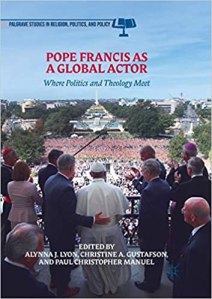
In 2016, Manuel published an edited volume with Alyana Lyon and Christine Gustfason of Saint Anselm College called Pope Francis as a Global Actor with Palgrave. That volume features articles presented by scholars at successive meetings of the New England Political Science Association in 2014 and 2015.
Other articles include “Religious Restriction in France,’ in the Oxford Research Encyclopedia of Politics (2019), and “Religion and Politics in Iberia: Clericalism, Anti-Clericalism and Democratization in Portugal and Spain,” (1998) that appeared in Religion and Politics in Comparative Perspective, edited by Clyde Wilcox and Ted Jelen, and published by the Cambridge University Press.
For background information, see: Piety and Politics Paul Manuel


Faith-Based Institutions and Social Welfare in Comparative Perspective
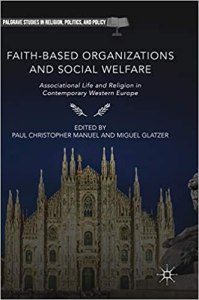
With Miguel Glatzer of LaSalle University, Manuel is editing a series of volumes on faith-based organizations and social welfare. These volumes examine the ways in which a variety of players, including government institutions and the nonprofit sector, work to deliver social services to those populations disproportionately impacted by inequities and disparities in income and wealth. The series also seeks to understand how associational life might be strengthened through the provision of social services by both Christian and Muslim nonprofits, and features case studies from West Europe , East Europe,and Latin America/Africa.
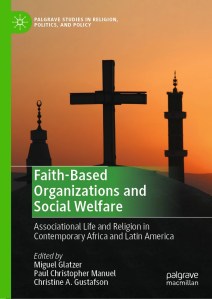
The third volume of the series, co-edited this volume with Miguel Glatzer (LaSalle University) and Christine Gustafson (Saint Anselm College) is called Faith-Based Organizations and Social Welfare: Associational Life and Religion in Contemporary Africa and Latin America. Among other questions, the chapters in this new volume examine the types of social service activities faith-based organizations engage in; their effect on civil society and democratic processes; their influence on the character of local and national communities; and what new pressures would be brought to bear on state-provided services if these faith-based organizations ceased to exist.
The series challenges the notion that declining rates of formal participation in religious life have made faith-based organizations irrelevant for civil society. Each volume gathers contributions from top scholars who examine the impact of faith-based welfare services on national and local communities.
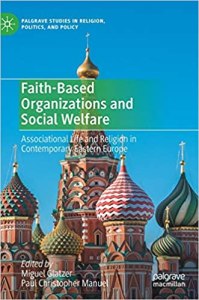
These volumes are part of the larger Palgrave Studies in Religion, Politics, and Policy. Our earlier two volumes include Faith-Based Organizations and Social Welfare: Associational Life and Religion in Contemporary Western Europe (2019), Faith-Based Organizations and Social Welfare: Associational Life and Religion in Contemporary Eastern Europe (2020), and Faith-Based Organizations and Social Welfare: Associational Life and Religion in Contemporary Africa and Latin America (2023).


Comparative Public Policy
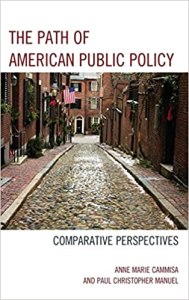
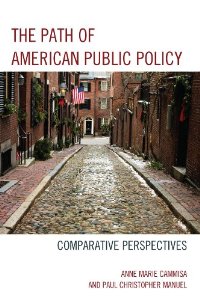
Manuel’s 2013 textbook The Path of American Public Policy: Comparative Perspectives, co-authored with Georgetown University professor Anne Marie Cammisa examines the American political experience in comparative perspective; how path dependence impacts institutional development; the role of agenda setting and agenda control in policy formation and implementation; the various forms of democractic regimes; and the relationship between institutions, policy process and outcomes. The book is designed for use in a variety of political science classes, including American politics, Comparative Politics and Comparative Public Policy.
The book, published by Roman & Littlefield, is an update of their 1998 textbook called Checks and Balances: How a Parliamentary System Could Change American Politics. Also see an op-ed Cammisa and Manuel wrote in 2008 on the subject: Op Ed by Paul Manuel and Anne Marie Cammisa
The Path of American Public Policy: Comparative Perspectives was “highly recommended by Choice maganize, the publishing unit of the Association of College and Research Libraries in 2013.


Star Trek and Politics
In all five of its televised series as well as its various movies, Star Trek story lines abound with the importance of the individual. From Captain James T. Kirk observing that “in every revolution there’s one man with a vision” to Captain Jean-Luc Picard noting “if we’re going to be damned, let’s be damned for who we really are,” and Captain Katherine Janeway declaring “we will find a way out of here,” we can see that individuals-and especially leaders- matter in the Star Trek universe.
Paul Manuel’s two chapters in the Political Science Fiction series examine the role of the individual in the Star Trek saga, with a focus on the original series which ran from 1966-1969. The first one appeared in Political Science Fiction, and the second in New Boundaries in Political Science Fiction, edited by Donald Hassler and Clyde Wilcox, and published by the University of South Carolina Press.
The chapters examine the various ways that the individual influenced events in the Star Trek universe. Throughout, they seek to illustrate how Star Trek takes individual actions seriously. That is, under what conditions might the personality of a particular leader actually direct the course of history?


 Professional Portfolio of Paul Christopher Manuel