Much of Paul Manuel’s career has gone into building experiential programs that take students out of the classroom and into the institutions they study. The positions below are listed from the most recent; the complete record is in the CV.
Lecturer, Enduring Questions First Year Program, Saint Anselm College, Manchester, New Hampshire, 2026–present
In 2026 Manuel returned to Saint Anselm College, where he had chaired the Department of Politics for fifteen years, to teach a section of Enduring Questions, the college’s year-long first-year humanities seminar.
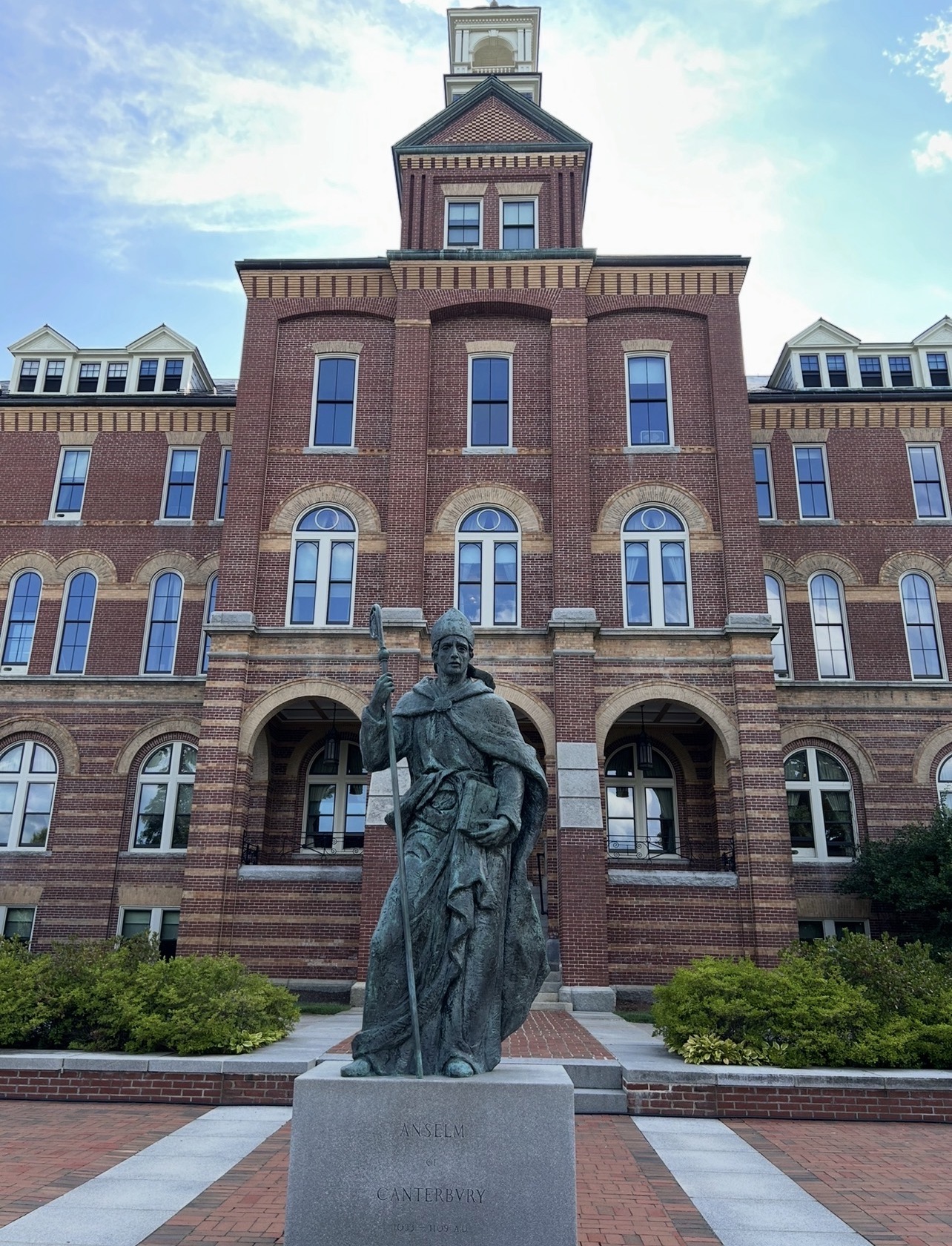
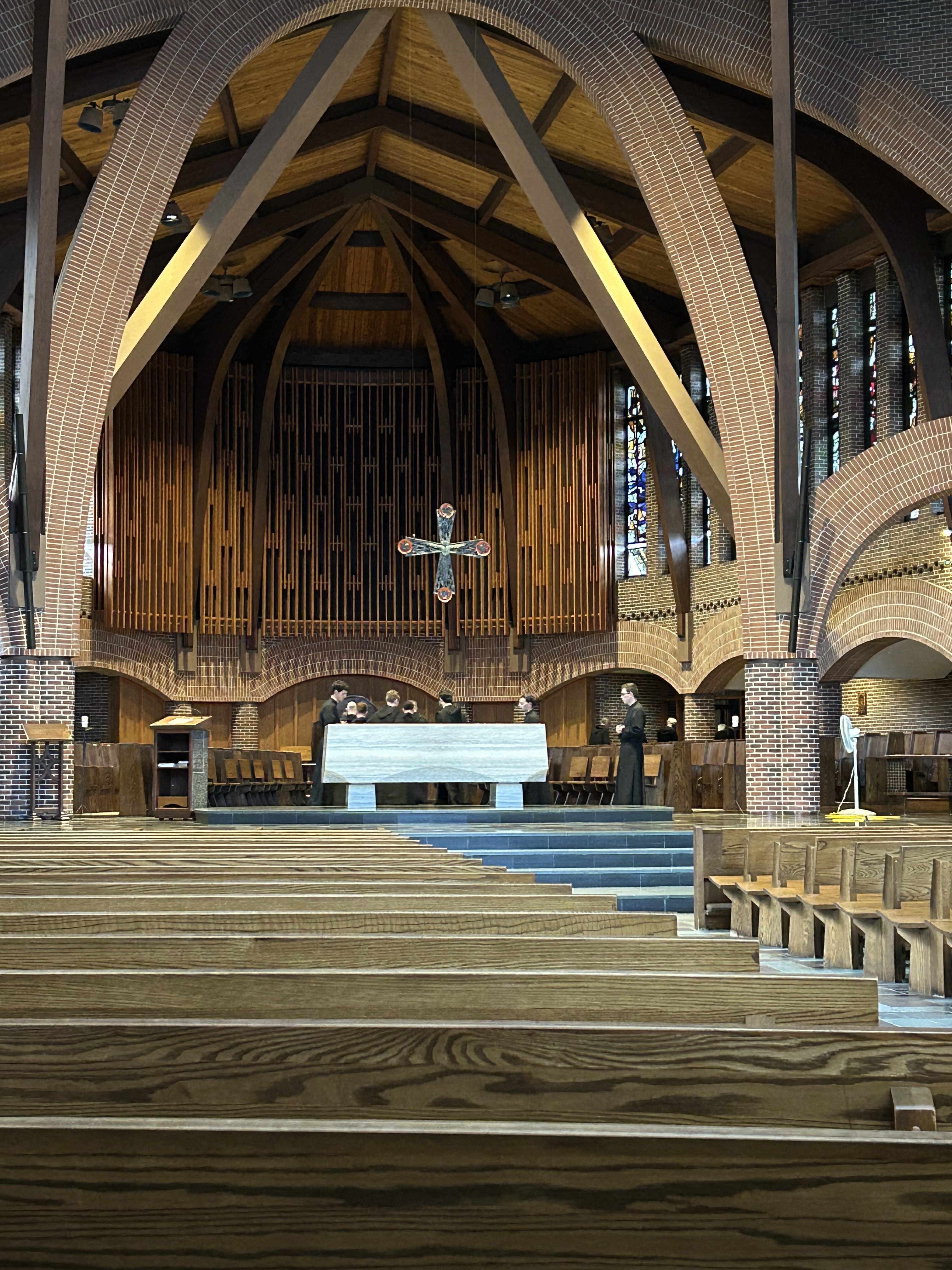
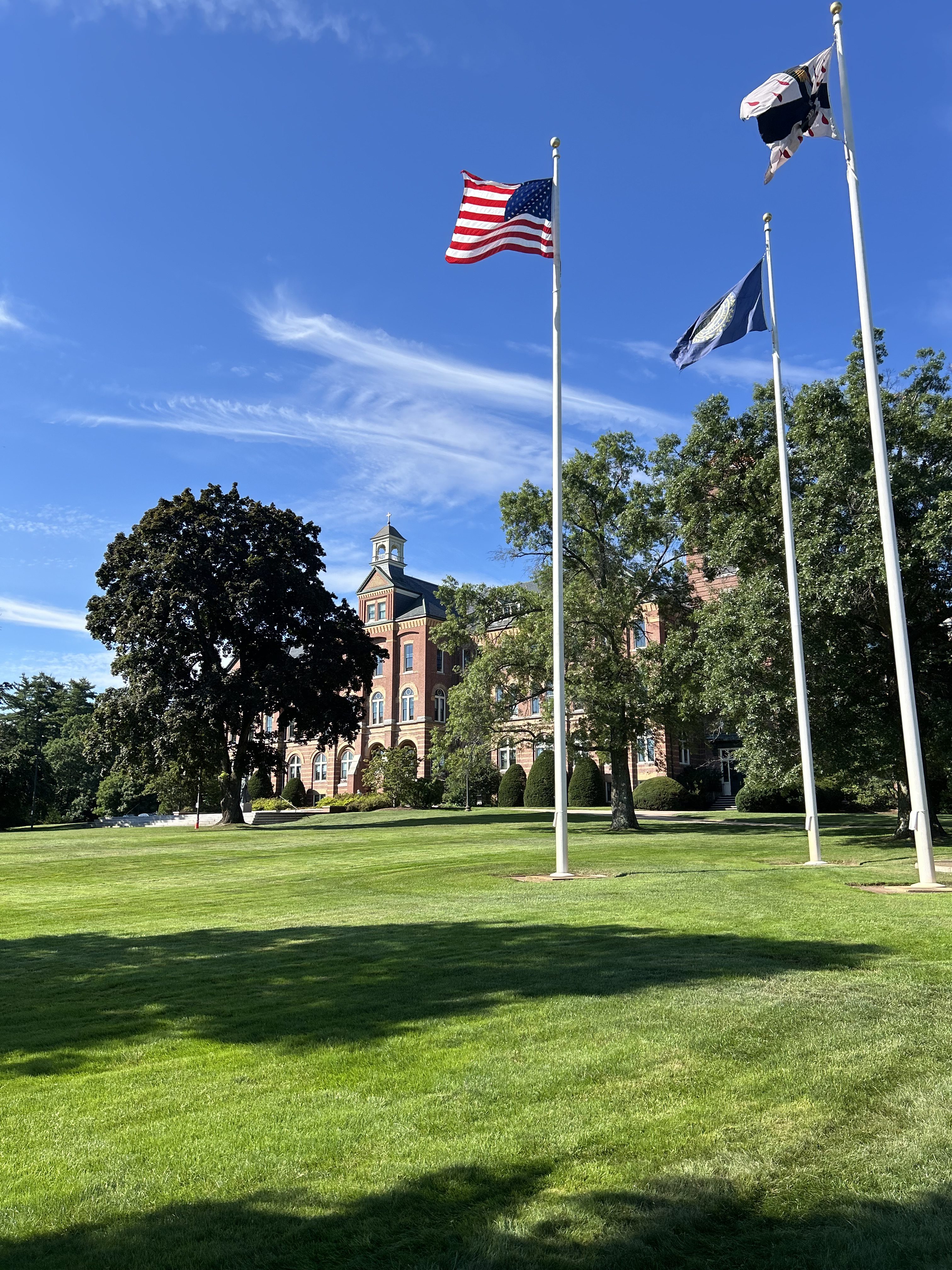
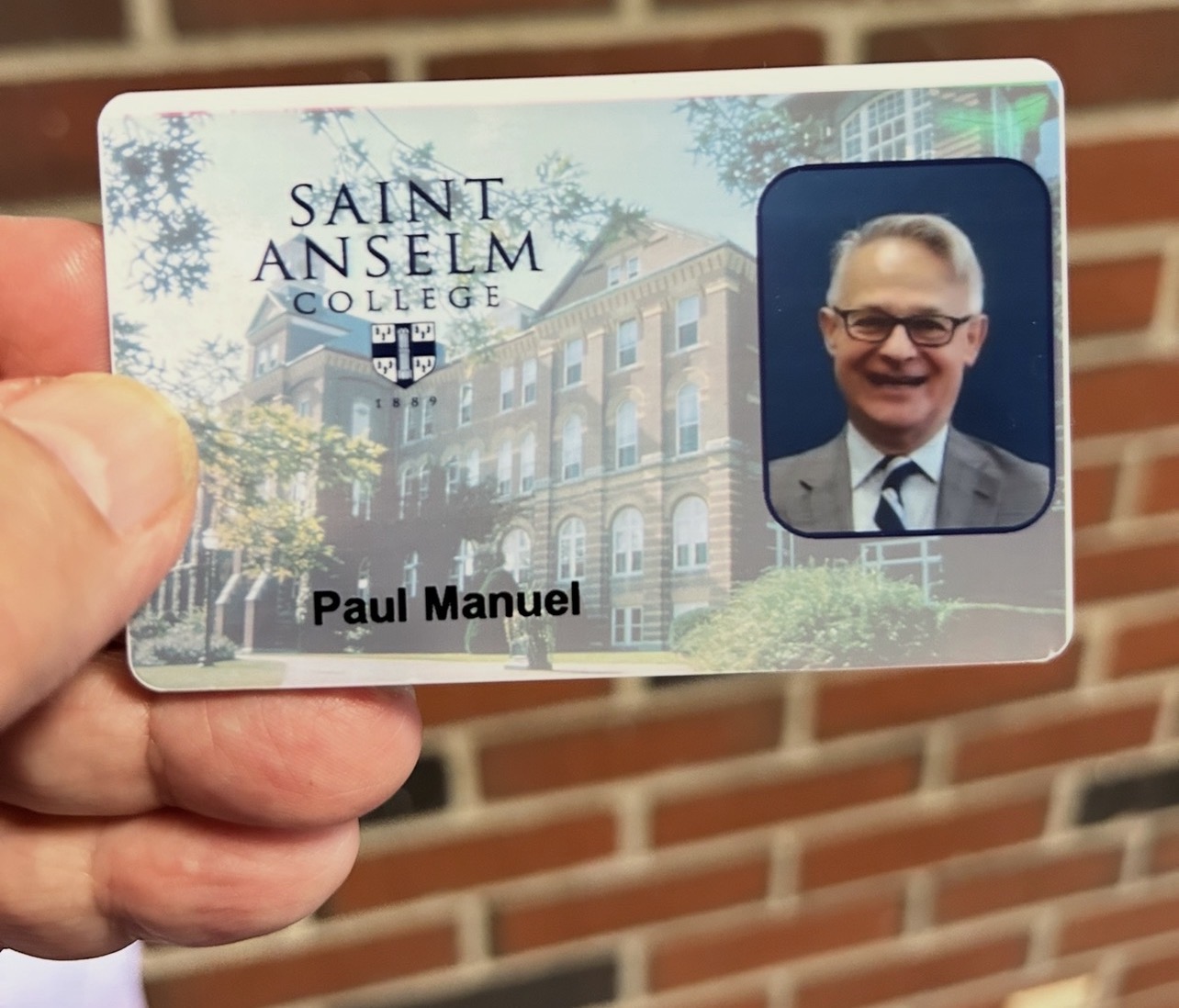
With his Enduring Questions students, Saint Anselm College, October 2026
Academic Director, Georgetown University Foreign Policy Academy, 2026–present
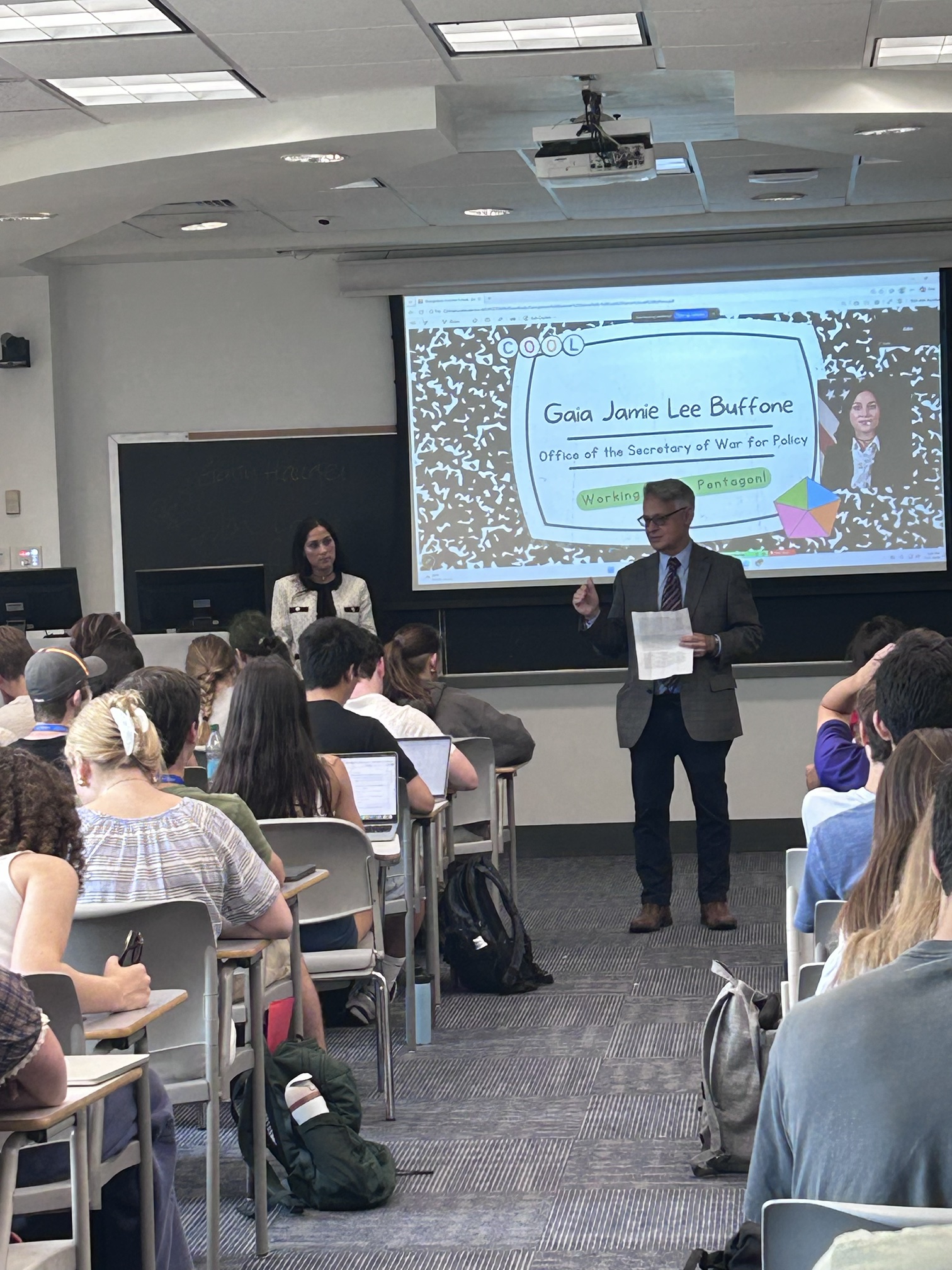
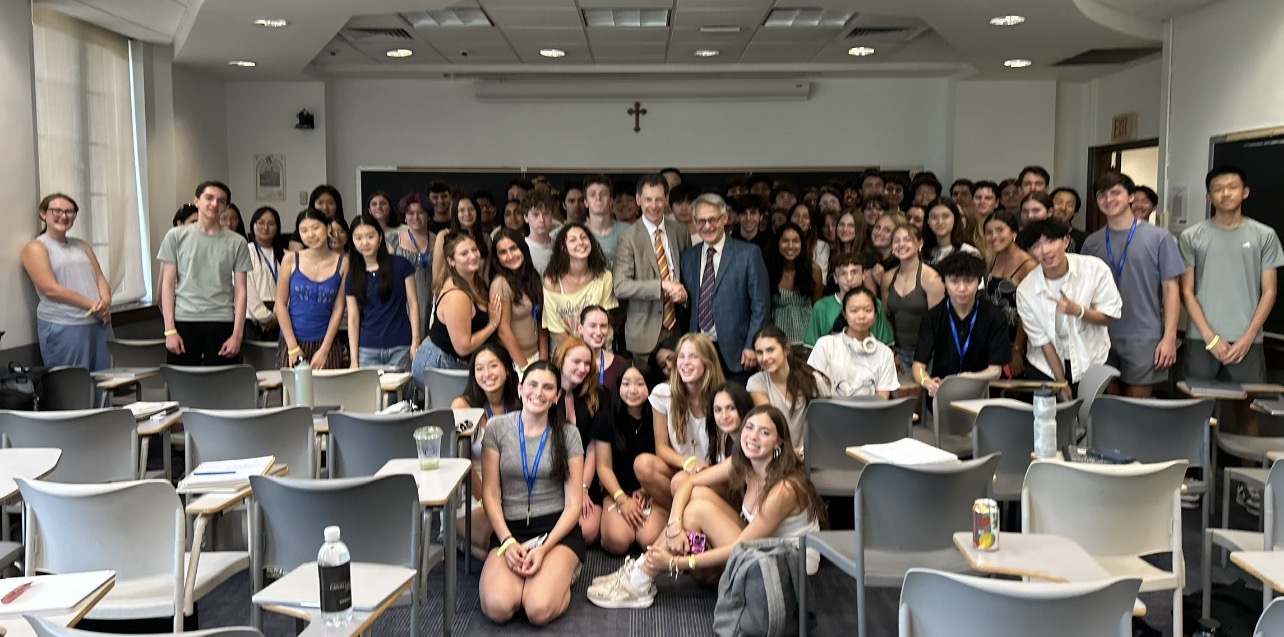
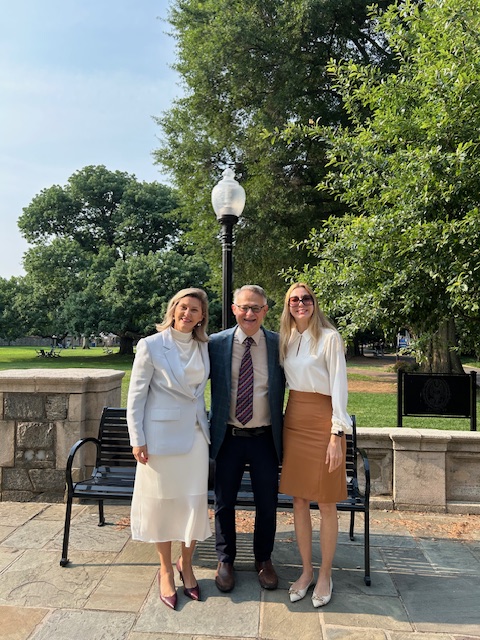
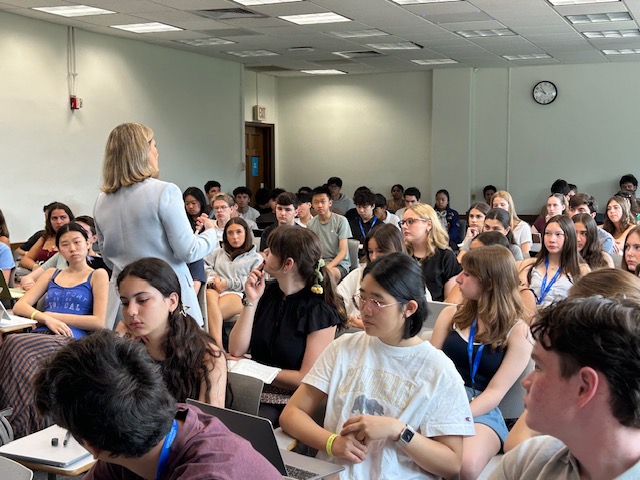
Georgetown’s Foreign Policy Academy combines lectures, talks by policymakers, embassy visits, crisis simulations and group discussion to show students how U.S. foreign policy is actually made. As academic director, Manuel designed and delivered the three-week, 90-contact-hour residential program for 94 students from 35 states and 20 countries in 2026, developing a National Security Council simulation and policy-memo assessments and coordinating eleven guest speakers and visits to the Department of State and to ambassadors’ official residences.
His daily account of the Summer 2026 program, posted on LinkedIn as it happened, is collected on Georgetown Foreign Policy Academy, Summer 2026: Day by Day.
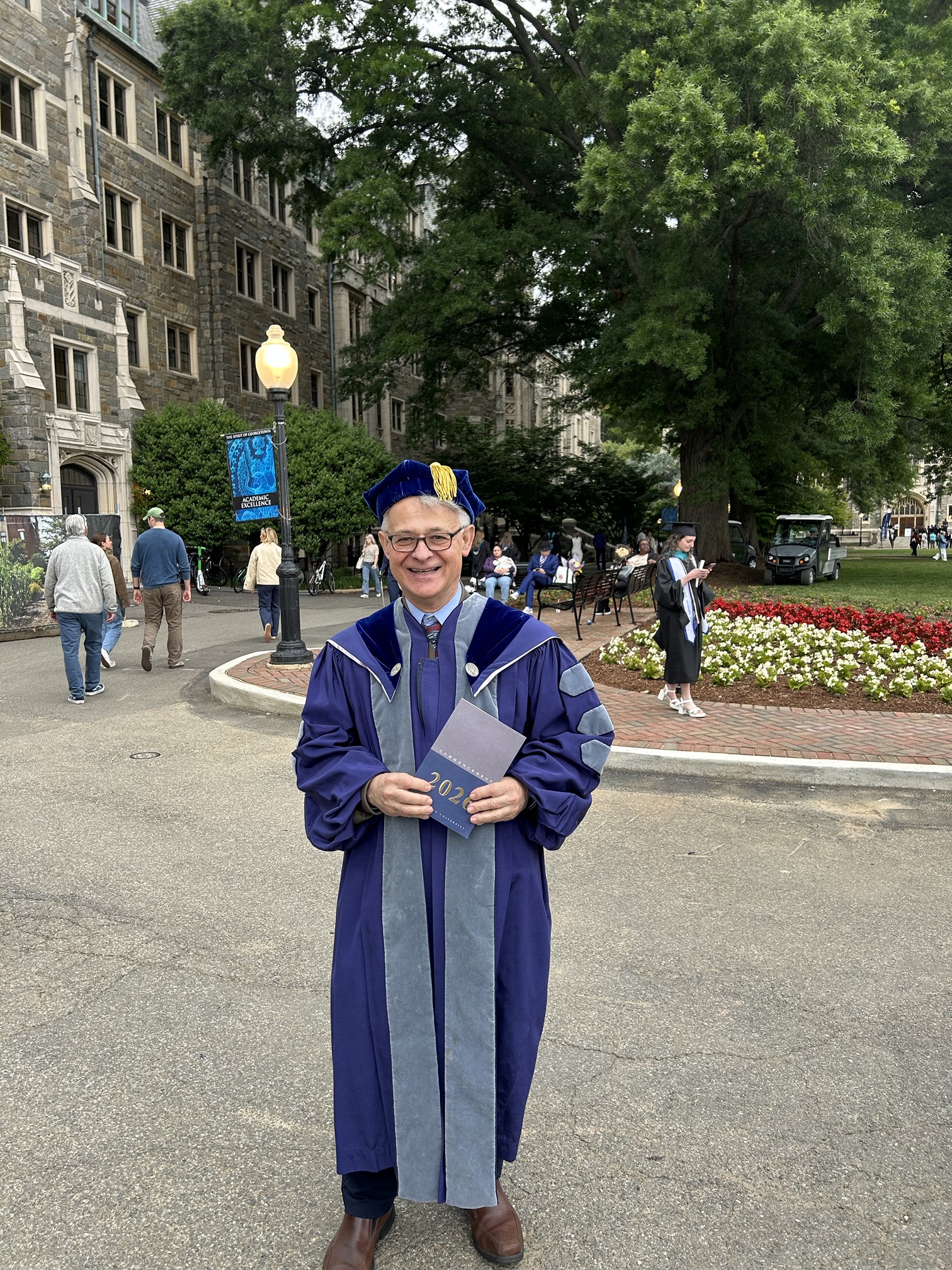
Affiliated Professor, Georgetown University, 2009–present
At the McCourt School of Public Policy Manuel teaches graduate courses on leadership and public management and supervises capstone projects. Since 2023 he has also taught undergraduate courses in the School of Continuing Studies and the Department of Government on international relations, international organizations, the role of the United States in the world, and comparative political systems. From 2024 to 2026 he was practicum coordinator of the M.A. in American Government program, responsible for advising, site placements and assessment.


Visiting Professor of Government, Claremont McKenna College Washington Program (2023–2025) and New York University, Washington, D.C. (2024–2025)
Manuel taught leadership and politics to Claremont McKenna students spending a semester interning in Washington, in a program that has paired full-time internships with academic coursework since 1972, and in 2024–2025 he also taught government in New York University’s Washington program.

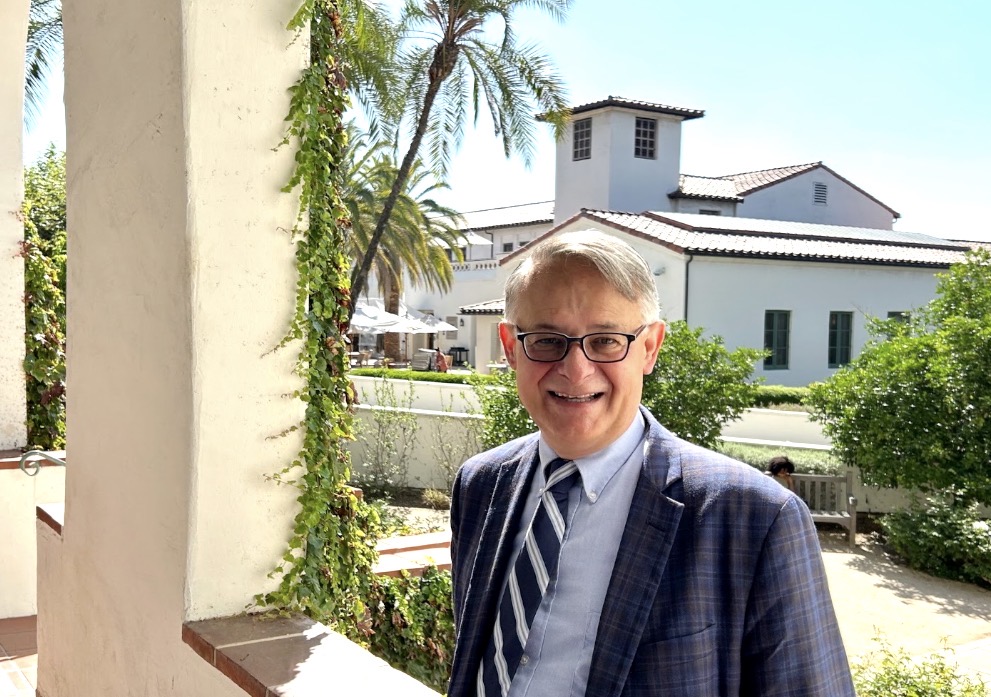
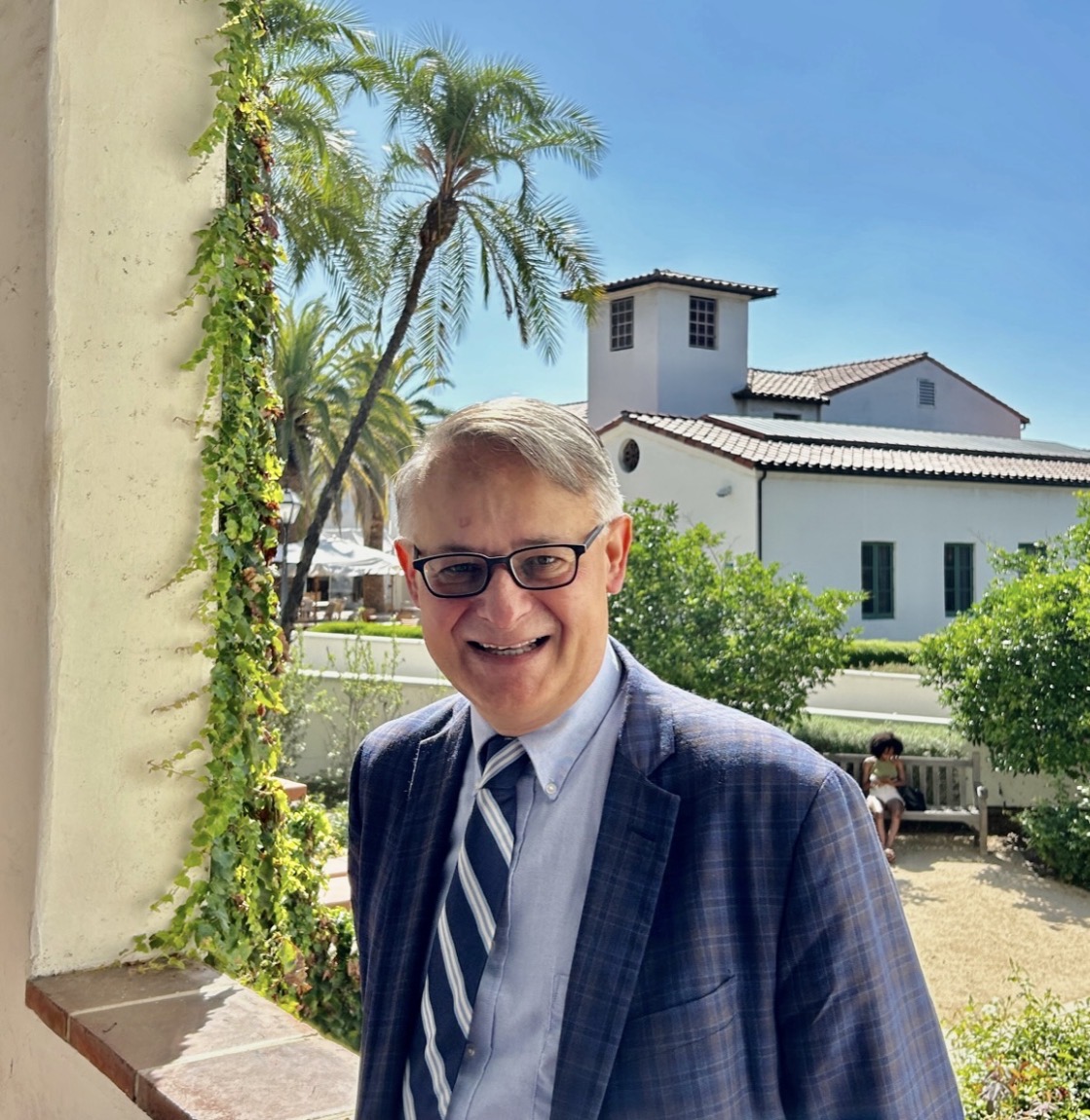


Director, School of Public Affairs Leadership Program, American University, Washington, D.C., and Hurst Senior Professorial Lecturer and Distinguished Scholar, 2015–2022
From October 2015 to December 2022 Manuel directed the Leadership Program in American University’s School of Public Affairs, a 15-credit sequence of courses, internships and two civic leadership projects that leads to a Certificate in Advanced Leadership Studies. He was responsible for its curriculum, assessment, staffing, budget and recruitment, advised some 170 students a year and supervised five staff. He designed the courses “Power, Politics, and Persuasion in D.C.” and “Leadership Development Lab” and added hybrid and online learning, an e-portfolio program and student retreats. He was nominated for the university’s award for Outstanding Teaching in a Full-Time Appointment in 2020.


American University Welcome Announcement for Paul Manuel in 2015
Leadership Program Full Report
Founding Director, Institute for Leadership (now the Ethical Leaders Program), 2010–2016, and Professor of Political Science, 2010–2015, Mount St. Mary’s University, Emmitsburg, Maryland
 The president of Mount St. Mary’s University asked Manuel in 2010 to build a leadership curriculum into the university’s new common educational experience. Working with deans, faculty, staff and students in all four schools and with the Mount Career Center, he wrote the founding white paper for a curriculum organized around engaged citizenship and professional preparation; 71 percent of the faculty and the full Board of Trustees approved it, and it formed part of the university’s 2015 Middle States reaccreditation report. As founding director he reported to both the provost and the executive vice president for student life, supervised five staff, advised some 500 students a year, secured more than $100,000 in grants and launched an emerging leader certificate program. In 2014 he was granted tenure in the political science department and nominated for the university’s award for outstanding teaching.


Founding Director, Mount Office of Competitive Fellowships, Mount St. Mary’s University, Emmitsburg, Maryland, 2012–2016
Manuel set up the Mount’s fellowships office, assembling an interdisciplinary faculty committee to advise students applying for national awards such as the Fulbright.
Participant, Accreditation Team Visits, Middle States Commission on Higher Education
Manuel served on Middle States accreditation team visits to the Institute of World Politics (2011) and St. Joseph’s University (2014), and on the review of Monmouth University (2015).
Chief Operating Officer and Director of Education, Institute for Global Engagement, Rosslyn, Virginia, 2008–2010
 At the Institute for Global Engagement, a Washington-area think tank, Manuel managed 17 staff and a multimillion-dollar budget, oversaw more than $1 million in grants, and ran its educational programs, policy forums and university partnerships. He organized two global leadership conferences on Muslim-Christian understanding at Georgetown University, in 2009 and 2010.
IGE Welcomes Paul Manuel in 2008
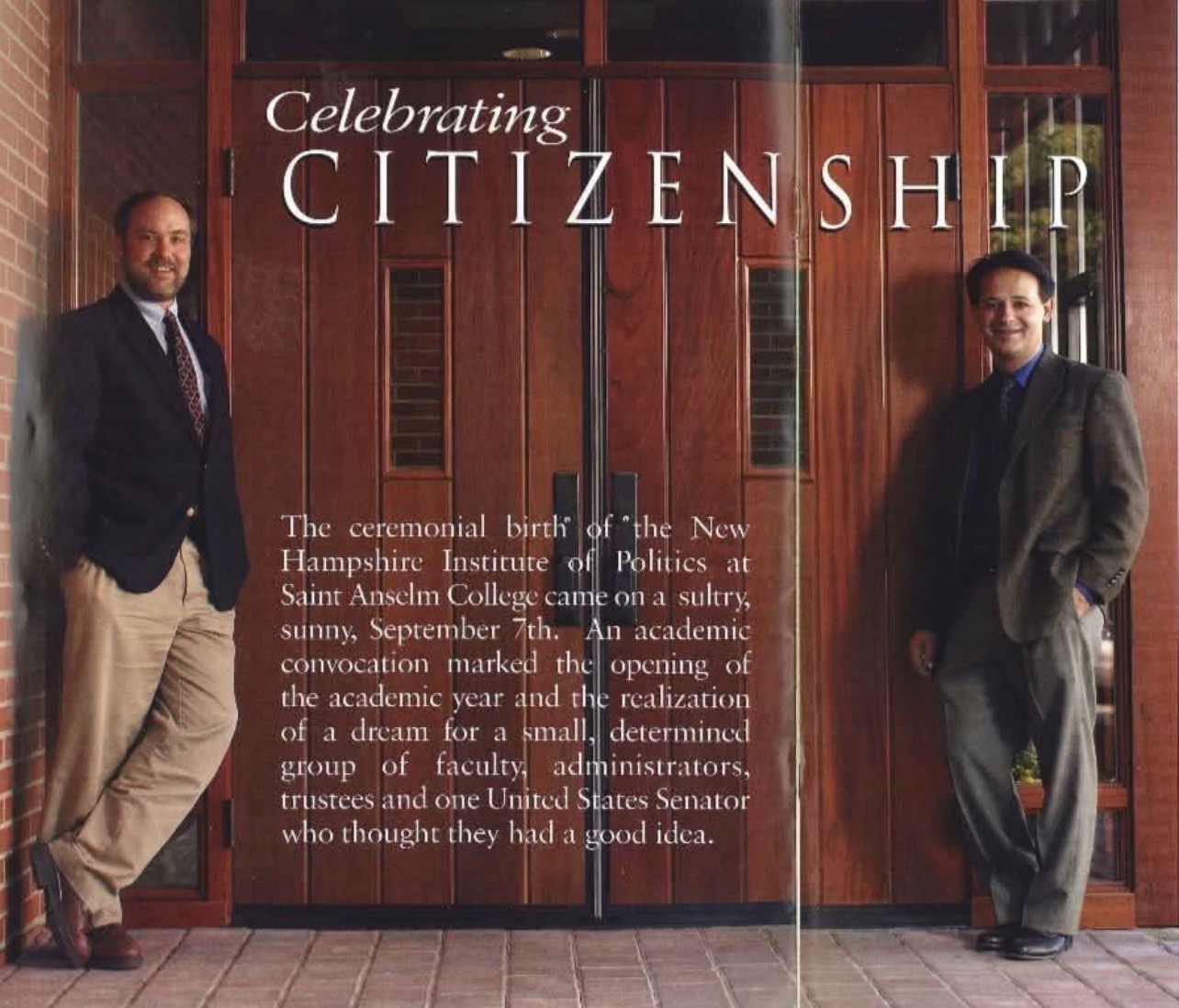
Co-Founder, New Hampshire Institute of Politics at Saint Anselm College (NHIOP), 1997–2001
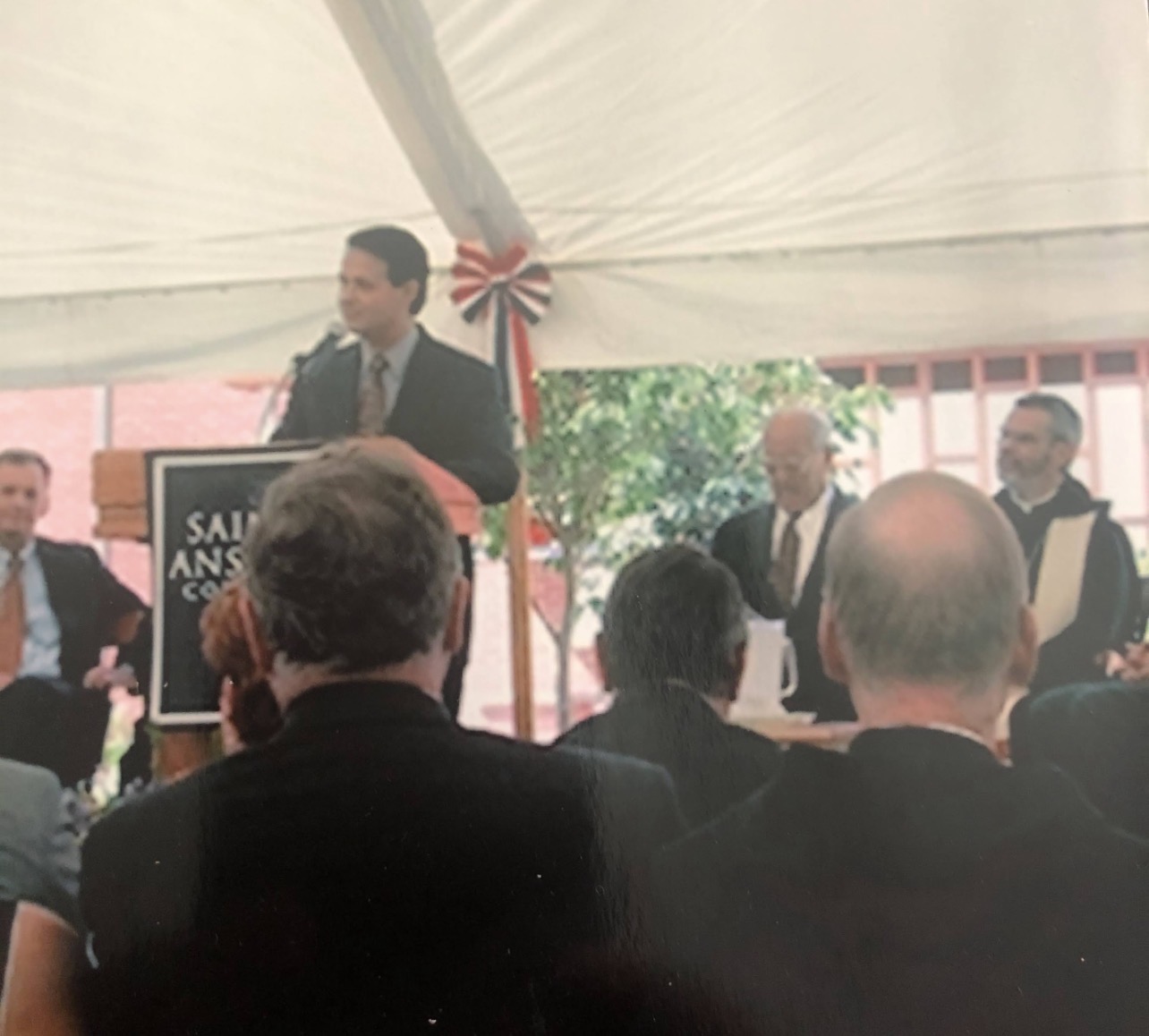
 The idea came from a politics student, Zach McLaughlin ’98, a work-study student for both Manuel, then chair of the Department of Politics, and Anne Botteri of the college’s development office, who suggested an institute modeled on the Institute of Politics at Harvard’s Kennedy School. Manuel, Botteri and politics professor Dale Kuehne took up the idea. The college’s president then asked Manuel to chair a campus-wide committee to develop it; he wrote the final proposal and presented it to the Board of Trustees, which approved it in June 1998.
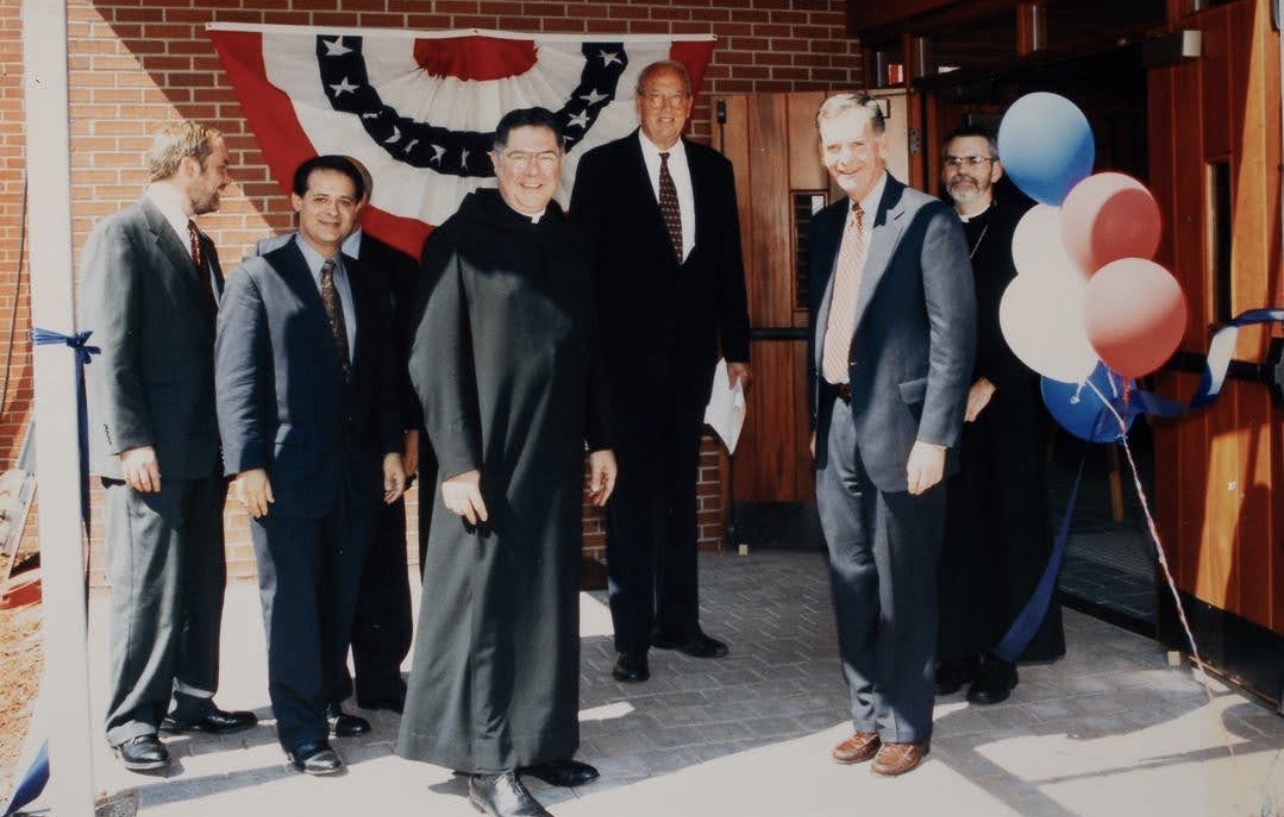
Manuel remained department chair while taking on the college-wide work of building the Institute, reporting to the executive vice president for academic affairs and working with the architects on the design of its academic and public spaces. With the Office of the President he helped to secure $14 million in federal funds for the Institute and to form its Public Advisory Council.
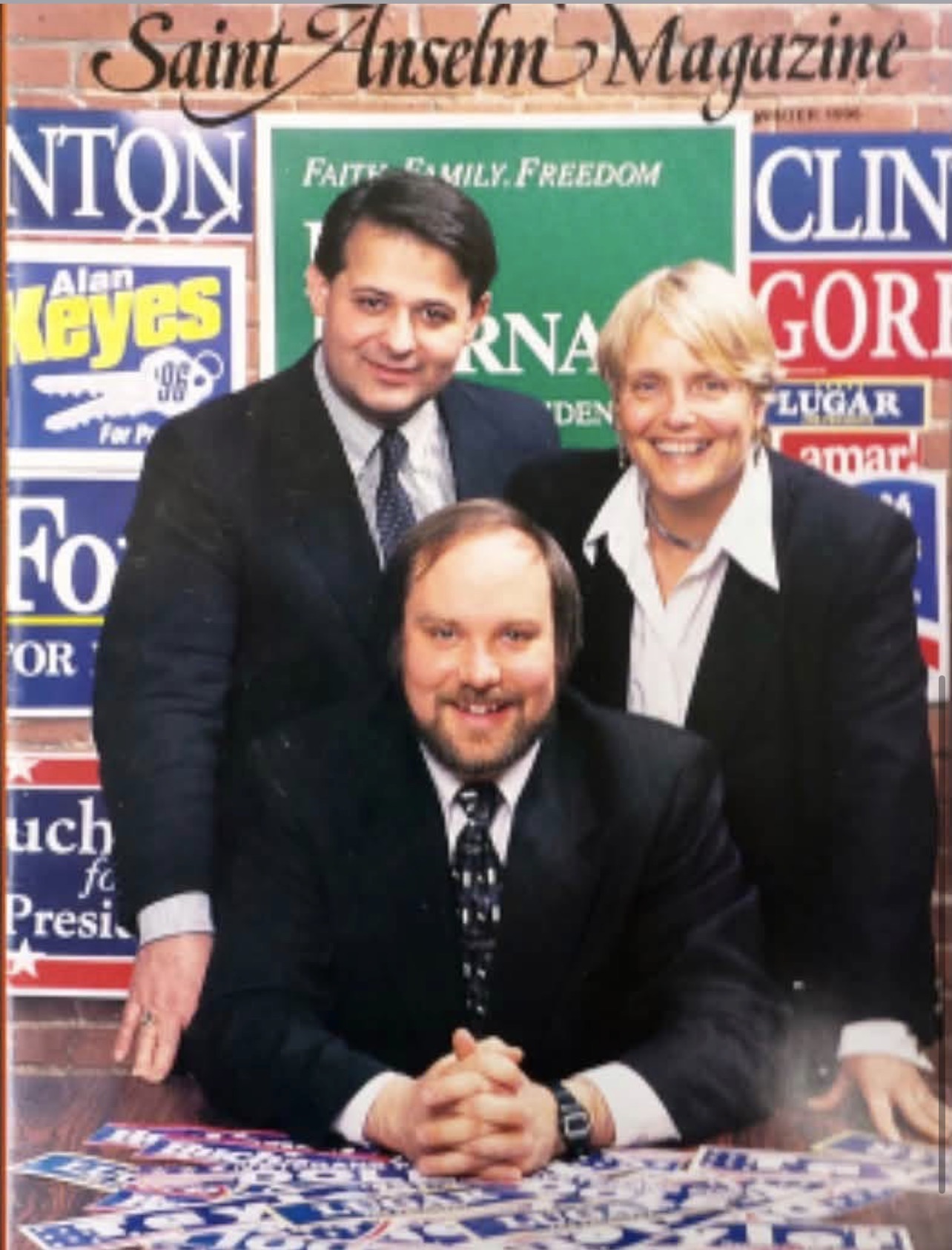


New Hampshire Institute of Politics Research Center Director, 2001–2008; Executive Director, 2007–2008
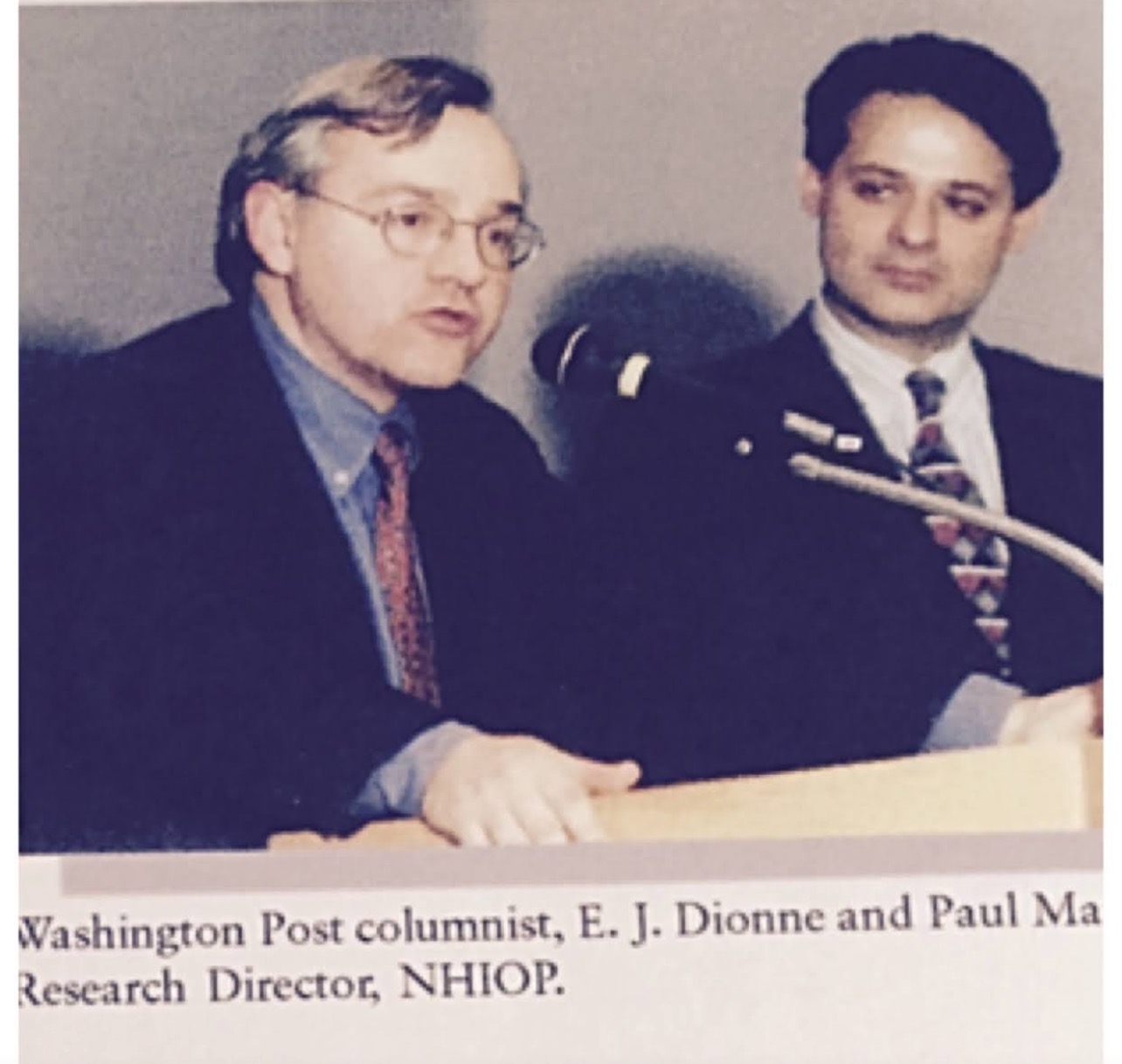
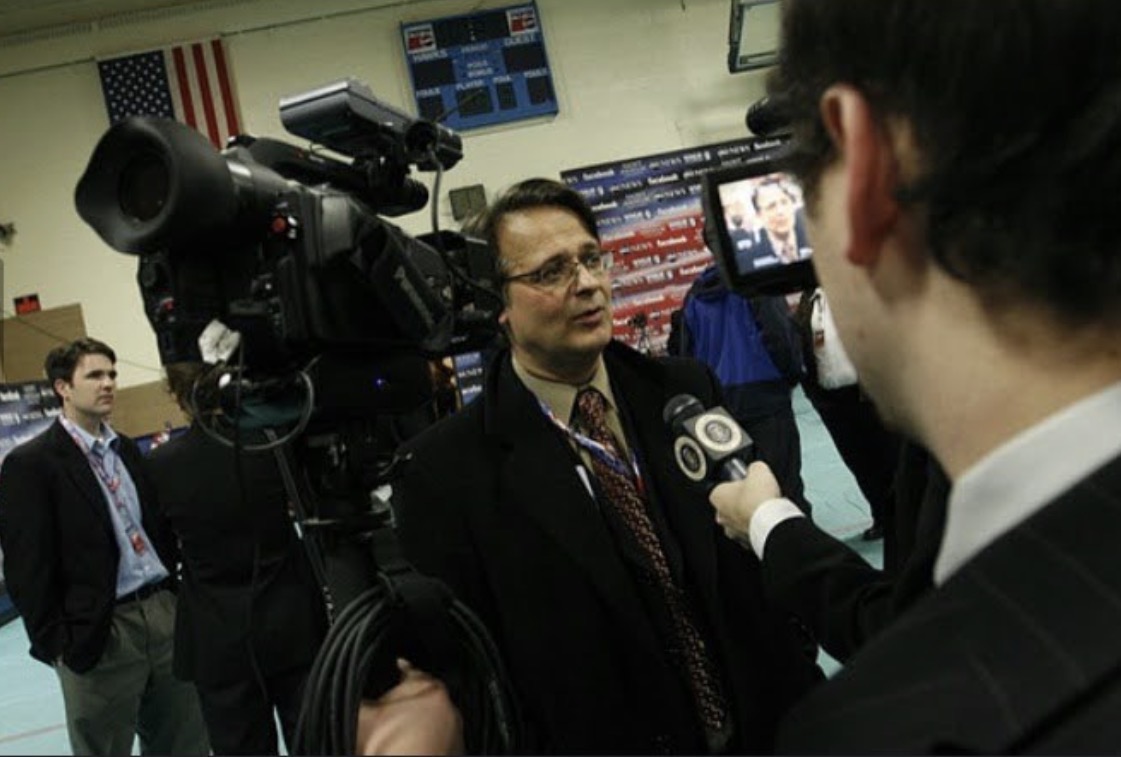
As research director Manuel set up four research centers, among them a Survey Research Center for public opinion polling, and connected sixteen academic departments to the Institute’s work through interdisciplinary teaching, faculty and student research support, and film, speaker and working paper series. As executive director he ran the Institute through the 2008 New Hampshire presidential primary, a period in which he appeared frequently on national and international television and radio.




Professor and Chair, Department of Politics, Saint Anselm College, Manchester, New Hampshire, 1993–2008

During Manuel’s fifteen years as chair the department grew from two faculty and 35 majors to seven faculty and 150 majors, adding tenure-track lines, an international relations major and a public policy certificate. He worked on the college’s New England accreditation self-studies of 1998 and 2008, and as a faculty senator (1999–2001) he worked on shared governance, faculty hiring, promotion and tenure, and academic freedom. He became full professor in 2002.


Manuel established the Upsilon Lambda chapter of Pi Sigma Alpha, the national political science honor society, at Saint Anselm College in 1995, and received its national “Best Chapter Advisor” award at the 2000 Annual Meeting of the American Political Science Association.

Recipient, Saint Anselm College President’s Award, 2006
Paul Manuel, Anne Botteri and Dale Kuehne received the Saint Anselm College President’s Award in 2006 for their work in founding the New Hampshire Institute of Politics.

Manuel and the Founding of the NHIOP
Paul Manuel, A Brief History of the NHIOP on the Occasion of Its 20th Anniversary
The First Fifteen Years of the New Hampshire Institute of Politics at Saint Anselm College in Photographs: Concept, Construction and Programs
The New Hampshire Institute of Politics at 25: A Debt of Gratitude (September 2026)
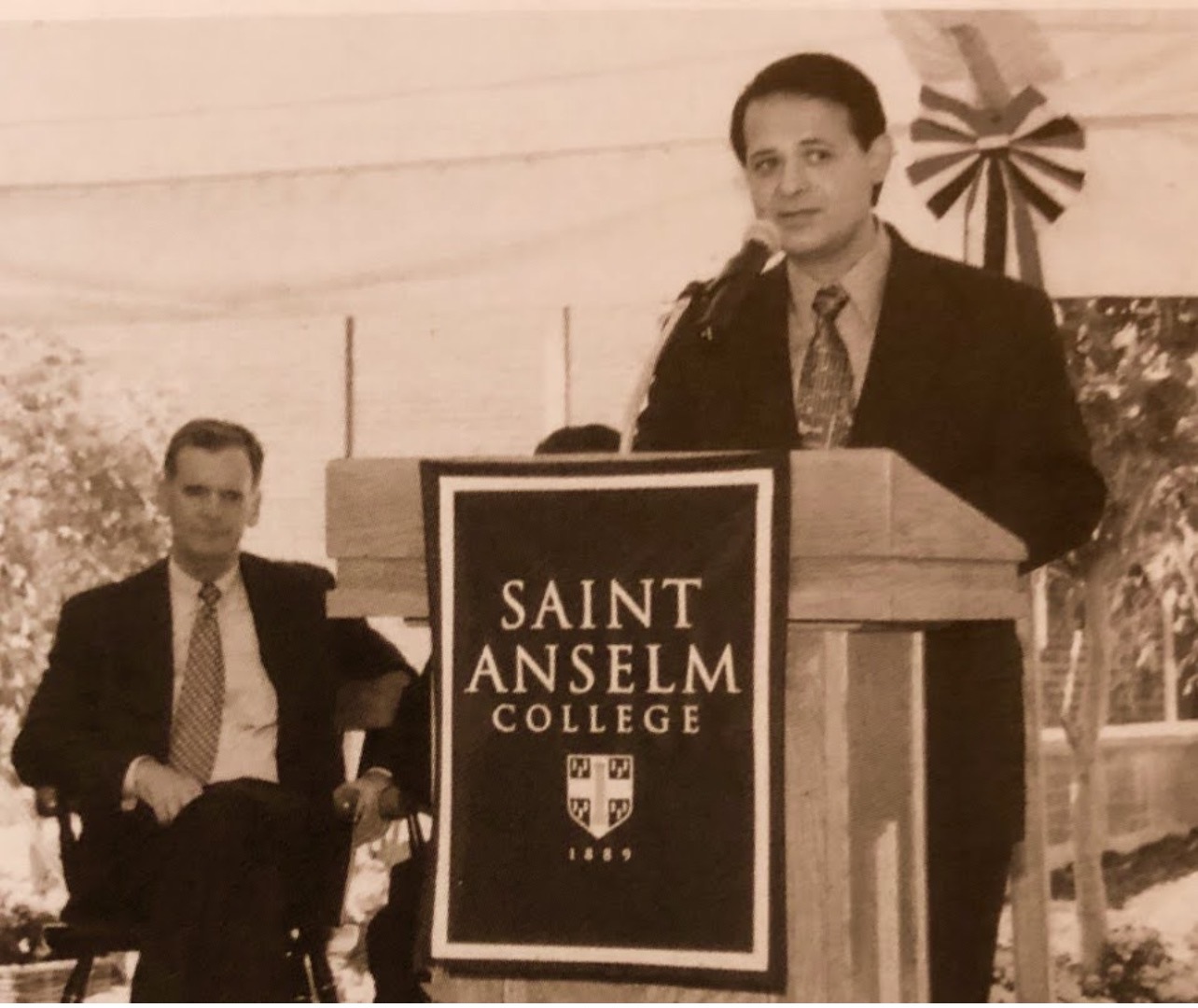
Twenty-five years ago this week the New Hampshire Institute of Politics (NHIOP) opened at Saint Anselm College.
Now, thirty-five years into my own academic career, it is a good moment to remember the people who made it happen. Some have since passed on, and all of them left their mark on the institute and on those of us who worked alongside them.
Father Jonathan DeFelice, OSB, college president from 1989 to 2013, opened the campus to every candidate and provided strong and steady leadership throughout, without which there would be no NHIOP. He is on the right in this photo from the 2006 President’s Award dinner, marking the institute’s fifth year, with Dale Kuehne, Anne Botteri, and me.
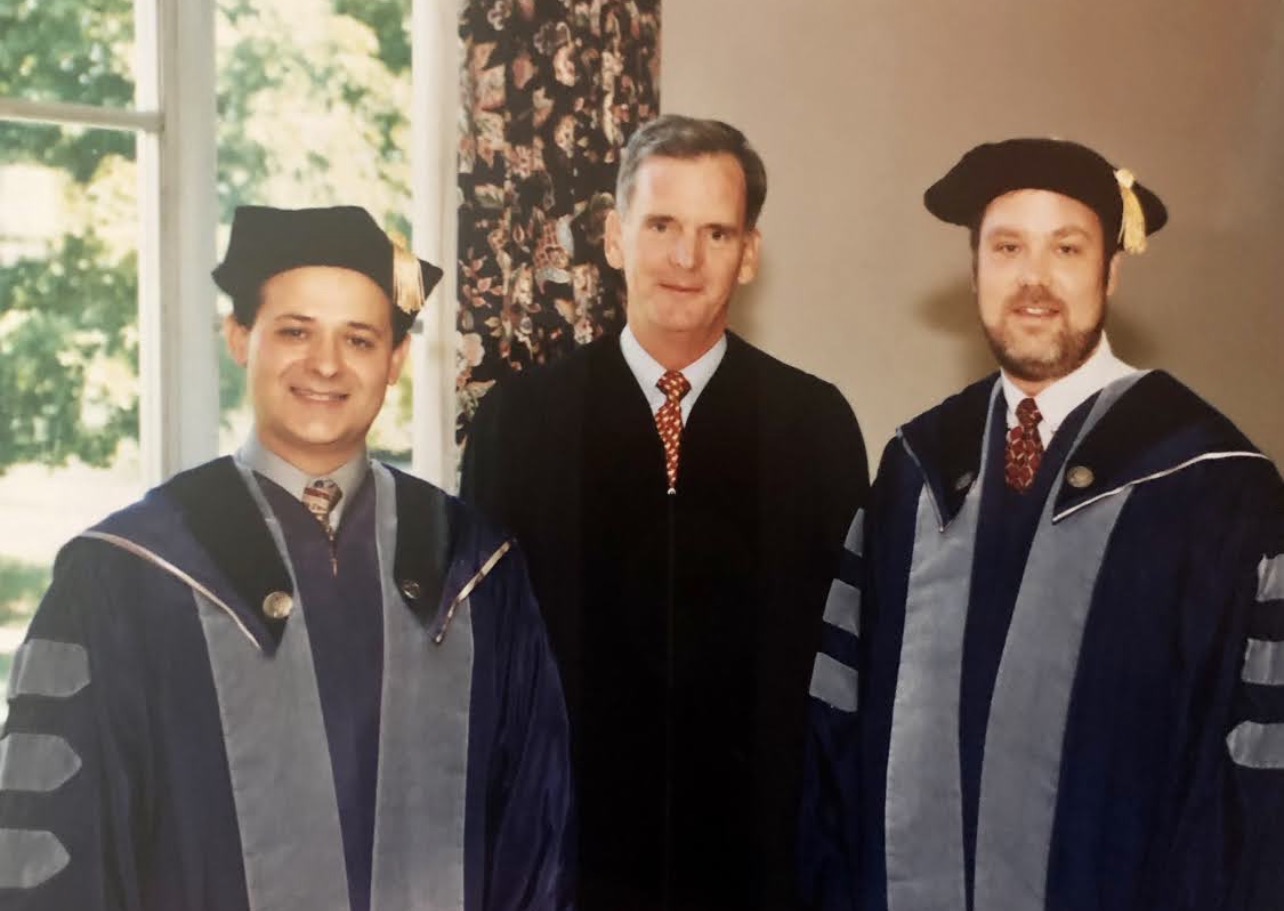
The late, great Father Peter Guerin, OSB, academic dean, gave Dale and me the course releases to do the work. U.S. Senator Judd Gregg secured the funding. Dale, the first executive director, made endless trips to Washington to raise funds for the project through two bouts with cancer. Anne carried the idea from the first memo through the board and later served as the second executive director. I served as the third, and Neil Levesque has been the fourth since 2009.
Others who made it possible include Abbot Matthew Leavy, OSB; the late Kevin Harrington, trustee, who asked the hard questions in 1998 and then became our strongest advocate; Father Mark Cooper, OSB, treasurer and later abbot; Jim Flanagan, director of development, who helped us secure the funding; executive vice presidents Gary Bouchard and Marie George, who brought the CNN debates to campus in 2007 and the back-to-back ABC/WMUR debates in 2008; trustees Bob Weiler, Bill Guerin, and Lucy Flynn; Silvia Shannon, first chair of the faculty advisory board; Cathy McLaughlin ’83, executive director of Harvard’s Institute of Politics, who served on the study committee and gave us a working model to adapt; architects Steve Judge ’69 and Jim Skelton, Don Moreau, and Eckman Construction, who turned an old armory into the building we know today; Barbara Baudot and our politics colleagues; Heather Newman and Lorie Cochran; Margaret Golden Sheehan, who worked with Anne Botteri at the time; Anne Camann, who has worked with all four executive directors in her 21-year NHIOP career and retires next year; and Neil Levesque, executive director since 2009.
And especially the students, from Zach McLaughlin ’98, who first suggested to us that Saint Anselm should have an institute like Harvard’s and is now Superintendent of Schools in Portsmouth, New Hampshire, to everyone else who has walked through the doors since.
After 25 years, the mission to educate, engage, and empower citizens continues, thanks to them and countless more.