English Language · Idioma · Langue · Lingua · Язык
语言 · भाषा · اللغة · زبان
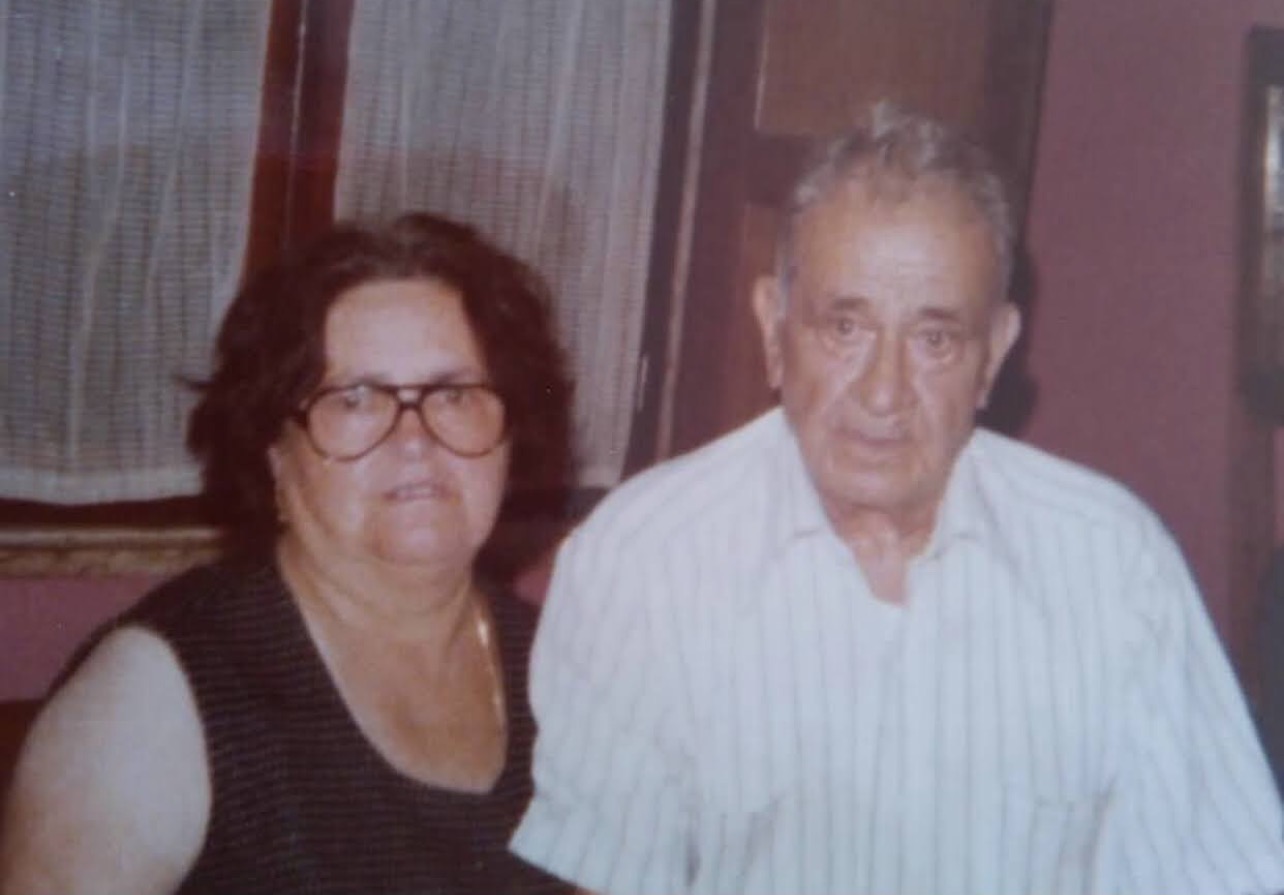
Joaquim Manuel, Sr., left Xartinho for America in 1919, after seven years in the coal mines at Valverde, and returned to Portugal every year for months at a time. He loved fado, his family and his friends, and he helped many people from the village come to America. Known as the Portuguese mayor of Cranston, Rhode Island, he met new arrivals at the docks in Boston, found them work and looked after them, from the 1930s until his death in 1984. At his funeral the procession of cars stretched back for miles, as the families he had helped settle in America over more than fifty years came to express their admiration, respect and gratitude.
His Grandfather
Joaquim Manuel, Sr.
Joaquim Manuel, Sr., was faithful, loyal and loving, pensive and reflective, and joyful too. He was proud to have come to America and raised his family there, but he never really left Portugal, and he returned every year for months at a time. He adored fado, above all the voice of Amália Rodrigues. He and Dr. Manuel’s grandmother, Maria Rosa dos Santos Manuel, gave their grandson Camões’s Os Lusíadas as a young man, to read for what it says about the love of Portugal and about destiny and fate. He taught those things as much by living them as by talking about them, and his own life began underground.
The Mines at Valverde
1912–1919
From 1912 to 1919, from the ages of twelve to nineteen, he worked in the coal mines at Valverde, between Alcanede and Mendiga, alongside his boyhood friend Joaquim Martins, Ana Maria Martins’s grandfather. Underground they feared for their lives every day. He told his grandson of the canaries they kept to warn of bad air, and of an existence that seemed to offer no future, in a village with no work. That shared fear sealed a friendship between the two families that has lasted four generations. In 1919 he left for America and a new life, and he left his mother behind.


Inside the Mina de São Pedro, a coal mine just outside Porto de Mós, December 2025. It is not the mine where his grandfather worked, but it was built and worked in the same way, and it gives a sense of what the mines at Valverde were like. Dr. Manuel and his daughter Rosa Caterina Manuel went in one evening during a short visit and found it frightening.
Days with His Grandfather
Xartinho, September 1979
Saudade holds joy as well as sorrow, and there was much joy in those years: the days fishing with him in his boat, bailing out the water when it came in, and the walks through the places of his youth and to the mines at Valverde.
Arriving in Lisbon
One of those trips came at the end of the summer of 1979, as Dr. Manuel was leaving for a year of study at Sciences Po in Paris. On Friday, August 31, his parents, his brothers, his college roommate, his grandfather and his Italian grandfather saw him off at Logan Airport in Boston, and he took a TAP Air Portugal flight to Lisbon, with a stop in the Azores. The next day, Saturday, September 1, he landed there to find his grandfather waiting with José Narciso and his daughter, Ana Maria. They drove to Porto de Mós and ended the day at a good restaurant in the town.
At the Café Furão
He spent Sunday with Ana Maria, and that afternoon he went on to Valverde, to the house of his tia Francelina Dias, his grandmother Maria Rosa’s sister, where he and his grandfather stayed. On Monday, September 3, his grandfather took the car and drove him all over Xartinho and the villages around it, and after a visit to his mother’s grave and lunch, he brought his grandson into the village to the Café Furão, the little tavern on the square.
It was a dusty room with a door onto the square and a couple of windows, a bartender, and two or three men talking over their cigarettes. He ordered a bottle of red table wine, earthy and nothing fancy, and told his grandson a story. Only years later did Dr. Manuel understand that he had been teaching him about saudade.


“Sonny boy, I want to tell you about my mother. I brought you to her Campo Santo. You understand that a son loves his mother, as you love yours. She was the best mother a son could have. She cared for me and my brother and was a wonderful wife to my father, and we were as close as a son and a mother can be. I confided in her. She knew my frustration and my pain at going down into that coal mine every day, and when I got home at night she had a caldo verde waiting for me and made sure I rested, so I could get up early the next day.
“But living that life, I saw that I had no chance at an education, a career, a vocation. My father’s brother, José Manuel Duarte, had gone to Philadelphia. English was a barrier for him, so he went back to Portugal and later took his family to Brazil, where they speak Portuguese. But he told me about the miracle that was America, that a young man belonged there and not in this dying village. When I told my mother I needed to try, she was quiet for a while and said, ‘I’ll miss you terribly. Think about it.’ So I thought about it for a few years while I saved for the passage. As I was turning nineteen, I told her, ‘I’m going to America. I’ll come back as often as I can.’
“Her reaction haunts me still. As I walked down the street to catch the bus on the main road to Lisbon, I heard her crying my name: ‘Filho, filho, fica, fica!’ Son, son, stay. I had to put it out of my mind, with tears in my eyes, and I got on the bus.
“About a month later I was in New Bedford, speaking no English, sleeping on the sidewalks and doing odd jobs, until a Portuguese businessman gave me work in his store. In time I found my way to Rhode Island and opened my own place, Jack’s Bar. Maria Rosa, the love of my life, came over soon after with her father and family, and we were married in New Bedford in 1922.
“I managed to come back every year. And when word came that she had passed away, I sent money so that she would be buried properly. People in our family never had the means for a proper burial, but she did.
“I tell you this, my sonny boy, so you understand the depth of love in our family, the love my mother had for me and has for you. When you go to the Campo Santo, say a prayer for her, say a prayer for the family, and always say a prayer of thanksgiving for the love we have known. It had to come from God himself. Respect the place, always. Venerate it, always.”
On to Paris
That evening José Narciso and Ana Maria came to Valverde for him and took him back to Porto de Mós, and from there to Lisbon. On Tuesday, September 4, he boarded the overnight train for Paris and from the station took the bus to the home of Jean-Noël and Béatrice Maestraggi. They were cousins of the Dallaporta family, his host family in Marseille when he studied at the École de Provence in 1976, and they helped him settle in until he found an apartment and began his studies at Sciences Po. His grandfather died in 1984. Dr. Manuel did as his grandfather had asked, and he still does.