English Language · Idioma · Langue · Lingua · Язык
语言 · भाषा · اللغة · زبان
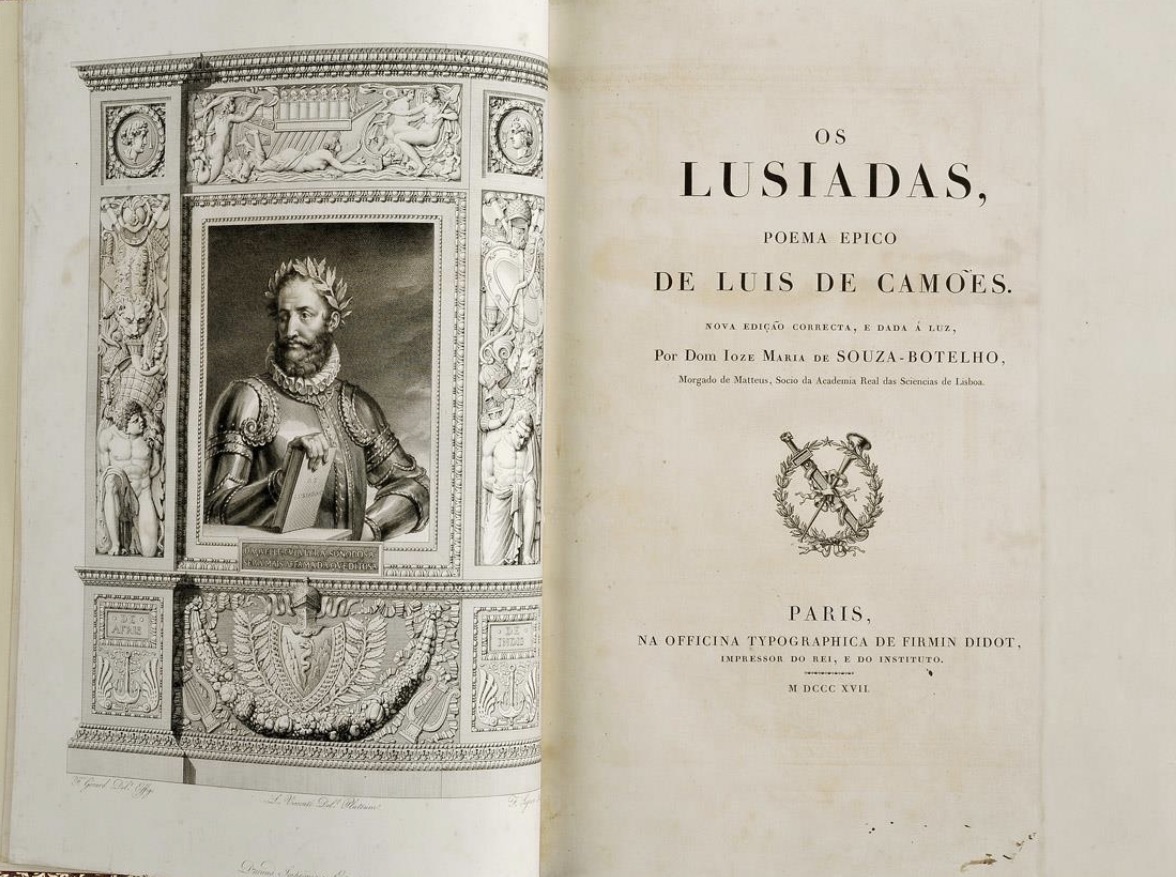
Joaquim Manuel, Sr., and Maria Rosa dos Santos Manuel gave their grandson Camões’s Os Lusíadas as a young man, to read for what it says about the love of Portugal and about destiny and fate. The edition shown here is not their copy but one like it, the edition prepared by the Morgado de Mateus and printed by Firmin Didot in Paris in 1817.
Published in 1572, Os Lusíadas tells the story of Vasco da Gama’s voyage to India in 1497 and 1498 and, through it, the history of Portugal. It is remembered as an epic of discovery and glory, but it is also full of partings. When the fleet leaves the beach at Belém in Canto IV, the mothers, wives and sisters on the shore weep for men they expect never to see again, and one mother asks her son, Por que me deixas, mísera e mesquinha? Por que de mi te vás, ó filho caro [Why do you leave me, wretched and forlorn? Why do you go from me, dear son?]. It is close to the cry Maria Gertrudes Manuel raised after her own son as he walked out of Xartinho in 1919.
The poem also gave the family the story of Pedro and Inês, told in Canto III and followed on the Places of Saudade page, and, at the same departure from Belém, the Old Man of Restelo, who warns against the price of leaving home in search of glory. Read with a grandfather’s life in mind, Os Lusíadas becomes a book about what departure costs those who stay as well as those who go, and about why, for the Portuguese, the voyage outward has always been bound up with the longing to return.
The edition shown here is the one prepared by the Morgado de Mateus and printed by Firmin Didot in Paris in 1817. It is not the copy his grandparents gave him, but it is the kind of book they placed in his hands.
The Portuguese painter António Carneiro (1872–1930) imagined Camões reading Os Lusíadas aloud to the friars of São Domingos. The scene belongs here because it shows the poem as the family received it, as something read aloud and shared.
